
Higher Level Assembly

 From Board-Level Builds to Fully Integrated Products 

HLAassemblyFPO2
HLAassembly3
HLAassembly2

Higher Level Assembly

From Board-Level Builds to Finished Product Integration

At SMT, we do not stop at the PCB.

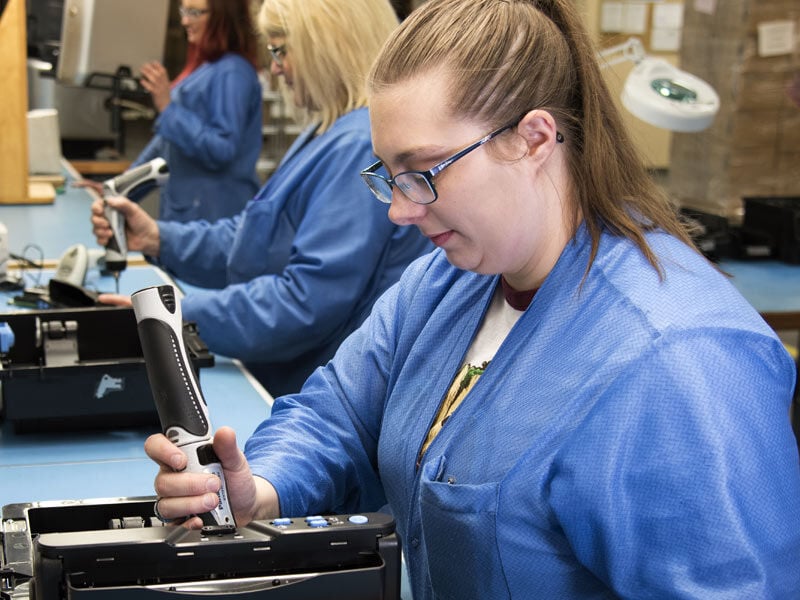
Many modern electronic products require more than board assembly. They require electronics, mechanics, cabling, enclosures, labeling, software or firmware configuration, functional testing, packaging, and documentation to come together as one finished system.

That is where Higher-Level Assembly fits.

SMT helps OEMs move from board-level builds to complete product integration through the same connected execution system that supports engineering, prototyping, supply chain, manufacturing, test, and quality.

The result is fewer handoffs, better control, stronger traceability, and a smoother path from PCB assembly to finished product.


More Than a Box Build

Higher-Level Assembly is sometimes described as “box build.”

For many products, that does not go far enough.

The real work is not simply putting a board into an enclosure.

The real work is making sure the full product comes together correctly:

  • Electronics
  • Mechanical components
  • Cabling
  • Enclosures
  • Labels
  • Firmware or configuration steps
  • Functional validation
  • Serialization
  • Packaging
  • Documentation
  • Final product readiness

SMT treats higher-level assembly as part of the product execution path — not as a secondary step after the board is complete.

 Part of a Connected System 

HLA at SMT is integrated with the same system that supports PCB assembly, test, quality, supply chain, and production planning.

That matters because final product integration often exposes issues that were not visible at the board level.

Mechanical fit.

Cable routing.

Enclosure tolerances.

Labeling requirements.

Final configuration.

System-level test.

Packaging expectations.

Documentation and traceability.

When those items are handled through disconnected suppliers or late-stage handoffs, risk increases.

SMT helps reduce that risk by keeping the work connected.

What SMT Supports 

System-Level Integration

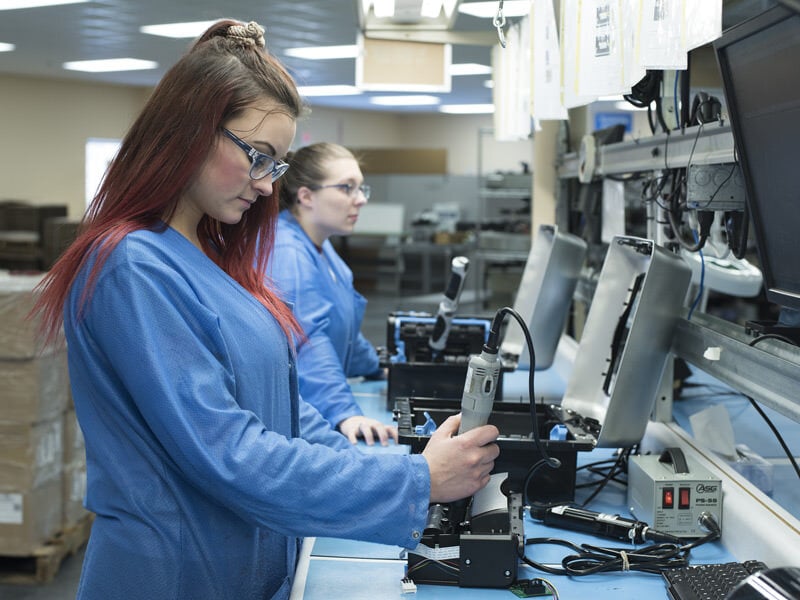
SMT integrates electronic assemblies, mechanical components, enclosures, cables, hardware, labeling, and related materials into complete product builds.

We help customers move from assembled boards to validated units ready for the next stage of deployment, distribution, or customer use.

Enclosures, Mounting, and Mechanical Assembly

Finished products often depend on mechanical consistency.

SMT supports enclosure integration, mounting hardware, tolerance management, cosmetic expectations, fit and finish, customer-supplied materials, and final configuration requirements.

Cabling and Interconnects

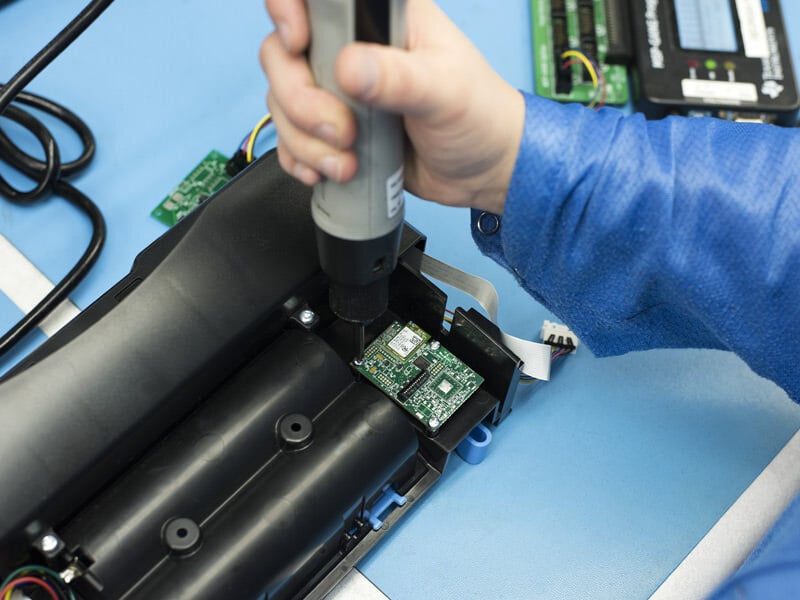
Many higher-level assemblies require cables, harnesses, connectors, routing, and strain-relief considerations.

SMT supports integration of electrical interconnects into the finished assembly process.

Final Assembly Testing

Higher-level assembly often requires more than board-level verification.

SMT supports final assembly testing, functional validation, customer-defined test protocols, serialized validation, and SMT-developed test fixtures where applicable.

Configuration and Serialization

For products that require identification, tracking, firmware loading, configuration, or serialized validation, SMT can support controlled execution steps aligned with customer requirements.

Packaging and Direct-Ship Readiness

SMT supports packaging, labeling, documentation, and product preparation to help finished units move safely and consistently through distribution or customer delivery.

Documentation and Traceability

SMT supports revision control, subassembly tracking, build documentation, inspection records, and traceability requirements associated with higher-level assembly programs.

Advanced HLA Capabilities 

Some products require additional integration beyond standard final assembly.

SMT can support higher-level assembly programs involving:

  • Precision mechanical components
  • Molded or machined parts
  • Fine-pitch and high-density electronic assemblies
  • Optical subsystem assembly and test
  • Motion control and electromechanical subsystems
  • Motors, actuators, sensors, and controls
  • Functional test and final validation
  • Robust packaging design and verification

These programs require coordination across electronics, mechanics, test, documentation, and production execution.

That is where SMT’s connected approach matters.

Where Higher-Level Assembly Programs Often Struggle 

Finished product builds often run into problems when:

  • PCB assembly and final assembly are handled by disconnected suppliers
  • Mechanical fit issues appear too late
  • Cable routing or enclosure requirements are not considered early
  • Functional test is not aligned with final product configuration
  • Packaging is treated as an afterthought
  • Documentation and revision control are not maintained through the full build
  • Traceability is lost between subassemblies and finished units
  • Final assembly expectations are not clearly defined before production

SMT is built to help customers address these risks earlier.


Why SMT for Higher-Level Assembly?

Fewer Handoffs

Keeping PCB assembly, test, final integration, documentation, and packaging connected helps reduce the friction that often occurs between separate suppliers.

Better Product Control

When electronics, mechanics, test, and final assembly are aligned, issues can be surfaced earlier and resolved with better context.

Traceability Through the Build

SMT supports traceability from board-level assembly through finished product integration, helping customers maintain control over revisions, subassemblies, and final units.

Test Built Into the Process

Final assembly often requires system-level validation.

SMT helps align test requirements, fixtures, configuration, and functional validation with the finished product build.

Scalable Execution

SMT supports higher-level assembly from pilot builds through ongoing production, helping customers scale finished product integration with consistent processes.

Right-Sized for Complex OEM Products

SMT is a strong fit for OEMs that need more than a board assembler but do not want unnecessary handoffs between engineering, manufacturing, test, final assembly, and packaging.


Who SMT Higher-Level Assembly Is Built For 

SMT HLA is a strong fit for OEMs that:

  • Need finished product integration beyond PCB assembly
  • Build products involving electronics, mechanics, enclosures, cabling, or sensors
  • Require final assembly testing or functional validation
  • Need serialization, labeling, packaging, or documentation control
  • Want fewer handoffs between board build and finished product assembly
  • Are moving from prototype or pilot builds into scalable production
  • Value traceability, communication, and execution control

Let’s build it right—start to finish.

From Board-Level Build to Finished System

A product is not complete just because the PCB is assembled.

For many OEMs, the real value comes when the board, enclosure, mechanics, cabling, test, packaging, and documentation come together into a finished system.

SMT helps customers make that transition with fewer handoffs and better execution control.

If your product needs more than a circuit board, SMT can help build the path from board-level assembly to finished product readiness.

Let’s build it right—start to finish.

Complete the Build

 If your product requires more than board-level assembly, SMT can support full integration through final build and delivery. 
How AI is Reshaping Electronics Manufacturing

AI

How AI is Reshaping Electronics Manufacturing

June 8, 2026 1 min read
Most EMS Partner Selections Miss The Mark - Here's Where They Go Wrong
mfg

Most EMS Partner Selections Miss The Mark - Here's Where They Go Wrong

June 4, 2026 4 min read
Why Testing Should Be Considered Before Production Starts
Why Testing Should Be Considered Before Production Starts

June 3, 2026 5 min read